Get Your Free Download

5 Mistakes People Make When Filing Old Tax Returns!


We respect your email privacy

Get Your Free Download

5 Mistakes People Make When Filing Old Tax Returns!


We respect your email privacy

About jaredrogers

This author has not yet filled in any details.
So far jaredrogers has created 74 blog entries.

How To Assemble Your 1040 Income Tax Return

If you are filing an old tax return, then unfortunately, it must be sent to the Internal Revenue Service via paper (versus electronically).  As we’ve become accustomed to E-Filing returns, sometimes it seems that the nuances of assembling a paper return have become something of a lost art (even for us practitioners).  The IRS processes paper tax returns in a specific manner, but don’t worry about decoding their system.  After you’ve finished preparing your return, it will take you just a few minutes (by following the steps below) to have your tax forms organized and ready for mailing/processing.

Step 1
Check your return for completeness and errors.  We recommend reviewing the following:

  1. All of your personal information (e.g. name, address, etc)
  2. Be sure your Social Security number is entered correctly
  3. Ensure only one filing status is checked
  4. Ensure that an allowable exemption is entered for each dependent you are claiming
  5. Ensure that you’ve included a daytime phone number

Step 2
Sign your return. The IRS won’t accept your return for processing unless it’s signed. If you’re married and file a joint return, both of you must sign it. The person whose name appears first on the tax return must sign in the “Your Signature” box, and the spouse listed second signs in the “Spouse’s Signature” box.

Step 3
Prepare your refund or payment information. If you’re due a refund and want direct deposit, include your bank account information in the “Refund” section above the signature boxes. If you owe taxes, prepare Form 1040-V, the voucher used to make a payment.  Just make sure not to staple your payment or voucher to the return.

Step 4
Gather your tax forms and schedules for assembly. Place your Form 1040 on top and other forms and schedules for your return behind it. On the schedules and forms you’ll notice an “attachment sequence” number in the upper right corner.  Use the attachment sequence numbers as your guide, following them in numerical order, starting with the lowest number.

IRS Sequence Numbers

IRS Sequence Numbers

Step 5
Attach any additional statements that are needed.  In some cases, you might need more room to list deductions or report entries on your return. If you prepare an additional statement, write your Social Security number at the top of your statement and note which form the statement is supplementing. You’ll attach your statement behind the related IRS form in your tax return. For example, if you list additional investment expenses on your statement for Schedule A, you’ll write “Additional Statement for Schedule A”, write the line number and amount of expense you’re reporting and attach the statement behind your Schedule A.

Step 6
Staple all your forms and schedules together in the upper right corner.

Step 7
Attach W-2 and 1099 income documents. You’ll receive a few copies of each income document that’s mailed to you. Find the federal copy of each form and staple them to the front of your Form 1040 in the income section. Only staple these forms to the first page of your 1040 – do not allow your staple to go through all the forms in your return.

Step 8
Check this post for information on the addresses where the return should be mailed to.

Processing Times & Refund Status
If you file a complete and accurate paper tax return, your refund will usually be issued within six to eight weeks from the date it is received.

If it hasn’t been received in the time frame outlined above and you are wanting to know the status, feel free to check the Federal or State Where’s My Refund Page(s) outlined in this post.  You can also check by calling the IRS Refund Hotline at 800–829–1954. If you use the online tool or call, just be prepared to provide your Social Security number, your filing status and the exact whole dollar amount of the refund shown on your return.
 

How Long Should I Keep My Tax Records?

While the IRS will not tell a taxpayer how long they need to keep their tax records, it’s prudent to keep them anyway.  But just what should you keep and for how long? As a general rule of thumb, if you “attempted’ to file your return correctly, then you will want to keep everything for 3 years.  However, take a look at the two tables shown below for further details and items only applicable to certain situations.

Supporting Tax Documentation To Keep

Item Supporting Record
Income Form(s) W-2
Form(s) 1099 (INT, DIV, Etc.)
Bank statements
Form(s) K-1
Expenses Canceled checks or other proof of payment
Invoices
Receipts
Home Closing statements/HUD-1
Purchase and sales invoices
Proof of payment
Insurance records
Investments Brokerage statements
Mutual fund statements
Form(s) 1099
Form(s) 2439


Length Of Time One Should Keep Their Tax Documentation

Situation Retention Period
Owed tax and the subsequent three situations do not apply to you 3 years
Did not report income that is more than 25% of the gross income shown on the return you filed 6 years
Filed a fraudulent return Indefinite
Do not file a return Indefinite
File a claim for credit/refund after you filed your return 3 years or 2 years after tax was paid (whichever is later)
File a claim for a loss from worthless securities 7 years


How were the lengths of time determined?  Most of them coincide the the various IRS Statute of Limitations.  This is the length of time the IRS has to assess additional tax against a taxpayer, request further information or subject a return to audit.  Needless to say, one wants to make sure they have their “proof” for at least the length of the statute.  However, it may be advisable to keep your support indefinite.

For example, if you make contributions to your IRA, you will want to probably keep all of your tax returns.  Why?  Well, when it comes time for you to make your withdrawals come retirement, those that represent a return of the money you contributed are tax free.  How will you know how much you contributed?  Exactly; you’ll need the originally filed tax returns!  So keep those tax records as long as you think you may need to; you never know when you may have to reference them to prove your case.

How To Find Your Prior Year E-File PIN

When you attempt to E-File your taxes, you will often times be prompted for your PIN.  What exactly is this?  It’s a 5 digit number located on the signature line of Income Tax Return.  This “E-File PIN” serves as your signature.  If you filed a return in the previous year, you will want to enter in the same number. What if you can’t find it? This post will discuss your options.

Identity Verification

When you E-File, the IRS wants to make sure that it is “really you” that is attempting to file the return.  They can do this by having you verify your prior year PIN or the prior year adjusted gross income (AGI) reflected on the return.  Without your PIN or AGI, you won’t be able to e-file the current return.

3 Ways to Find Your PIN

If you filed taxes last year, you can obtain your PIN, by doing one of the following:

Look at a copy of your Return. Contact whomever prepared your tax return last year for a copy. From that return, you’ll be able to see the PIN that was used on the signature line.  If you used tax software, you can contact the service provider as they should still have it on file.  Alternatively, they may have emailed it to you when you actually filed last year. As such, take a look in your email and see if it is there.

Use the IRS PIN tool. If locating a copy of the return isn’t an option,  you can use the IRS PIN Tool to retrive it.  It’s a useful and easy to use tool and only requires you to know your basic information (e.g. name, address, date of birth, social security number), along with the filing status used (single, married filing jointly, etc).  Then, within seconds (or minutes), the IRS website will provide your the PIN.

Call the IRS. You can always call the IRS directly at 1-800-829-1040 to obtain your PIN.

In closing, here are a few things to keep in mind:

  1. The one thing to keep in mind is that your E-File PIN IS NOT the same as an identity theft PIN.  You can read more about the process of dealing with tax identity theft and obtaining an ID Theft PIN in this post.
  2. If you make a “new” 5-digit E-File PIN for your taxes this year, make sure you write it down. Your current year  PIN will be used when filing your tax return next year.
  3. E-file PINs can be confusing, but you shouldn’t let that stop you from filing. If you’re confused about your PIN or have any other tax related issue, our team of xperts are standing by to assist you.  Just give us a call or shoot us an e-mail via the links at the top and bottom of this page!

Should I Amend My Tax Return?

Sometimes you will get a Form 1099 or Form K1 after you already filed your income tax return.  Sometimes you will “remember” that W2 or 1099-MISC that you should have gotten in the mail but didn’t (like when you move and don’t tell your old employer).  No matter what the reason is, sometimes you simply need to make some changes to your return.  But what changes require you to file an amendment and just how do you go about the whole thing?  Keep reading dear friend, keep reading.

When you should make changes.

Amend to correct errors.  You should file an amended tax return to correct errors or make changes that are needed to your original tax return. For example, you should amend to change your filing status, correct the amount of income reported, or fix erroneous/omitted deductions or credits.

Don’t amend for errors where the IRS also receives a form.  You normally won’t need to file an amended return to correct math errors where the IRS receives the same form. The IRS will typically correct those for you.  For example, if you failed to report $1,000 of interest reported on Form 1099-INT, the IRS will usually fix it and send you a letter telling you they did so.  But if you transposed the income number for your cash based vending machine business on Schedule C (i.e. $8,999 vs $9,899) then you’ll want to file an amendment to report the correct figure as the IRS will never know it is wrong.

How long do you have to file your amendment?

You usually have three years from the due date of your original tax return to file an amended return.  This is particularly true if you need to claim a refund. You can file it within two years from the date you paid the tax, if that date is later. For example, the last day for most people to file a 2011 claim for a refund was April 15, 2015 as the due date for that return was April 15, 2012.  For more information about this and other IRS statute of limitations, check out this post.

How do you file an amendment?

Use Form 1040X, Amended U.S. Individual Income Tax Return, to correct your tax return.  Note that this form must be filed via paper as it can’t be e-filed. As such, check out this post on the IRS website for the address applicable to your state as to where it should be mailed.  It should also be noted that you will want to include the Form 1040X, the original schedules that you filed and then the amended or changed schedules.  This way the IRS will be able to see what was originally filed and what was changed.

Other helpful things to know.

Wait to file for a “second” refund.  If you are due a refund from your original return, wait to get that refund before filing and amended return to claim an “additional” refund.  Amended returns take up to 16 weeks to process so:

  1. you don’t want things to get crossed up in the IRS system by having two returns being simultaneously processed.
  2. expect to wait a while before you receive your money.  Amended refunds will come via check, even if you provide direct deposit information.

Pay additional tax as soon as you can.  If you owe more tax as a result of your amendment, pay the tax as soon as you can. This will stop interest and penalties from accruing unnecessarily. You can use IRS Direct Pay to pay this amount directly from your checking or savings account

Don’t amend to correct Form 1095-A errors.  Taxpayers who filed a 2014 tax return and claimed a premium tax credit using incorrect information generally do not have to file an amended return even if additional taxes would be owed. The IRS may contact you to ask for a copy of your corrected Form 1095-A to verify the information.

Track your amended return.  You can track the status of your amended tax return three weeks after it’s been filed with the IRS ‘Where’s My Amended Return?’ online tool or by calling 866-464-2050. The tool can track the status of an amended return for the current year and up to three years back.  If you have filed amended returns for multiple years, you can check each year one at a time.

Need help filing your amendment?

If you don’t want to go through the hassle of doing all those calculations, filling out the various forms and then trudging down to the post office to wait in line and mail them, why not give us a call?  We’d be happy to help you navigate the process and get the correct forms to the IRS ASAP.

States With No Income Tax

When tax time rolls around, you typically have to file a state income tax return at the same time that you file your federal income tax return.  However, if you live or work in one of these seven states you will not  have to file an income tax return come tax time:

  • Alaska
  • Florida
  • Nevada
  • South Dakota
  • Texas
  • Washington
  • Wyoming

In addition to the above states, the following two only tax income from dividends and interest:

  • Tennessee
  • New Hampshire

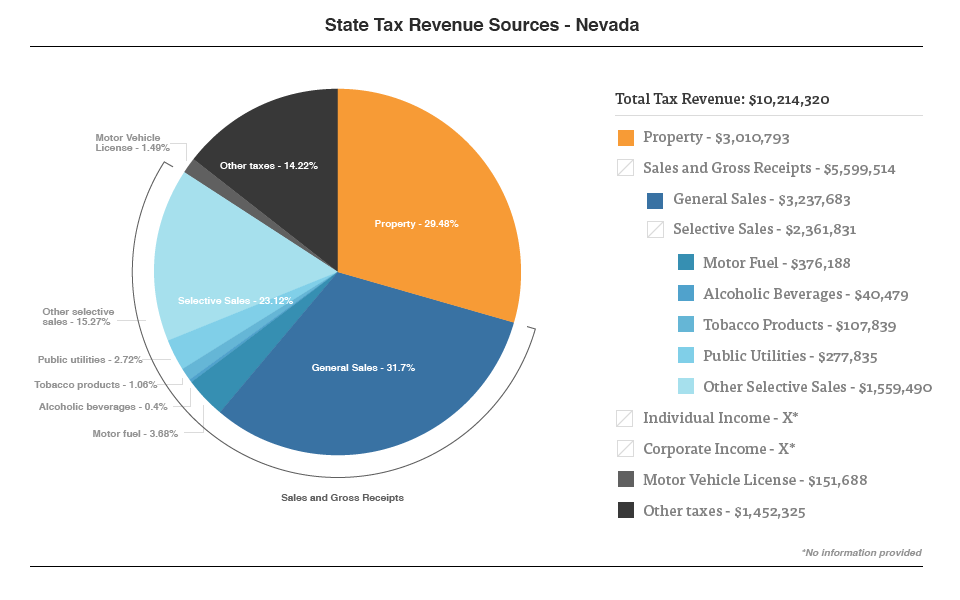
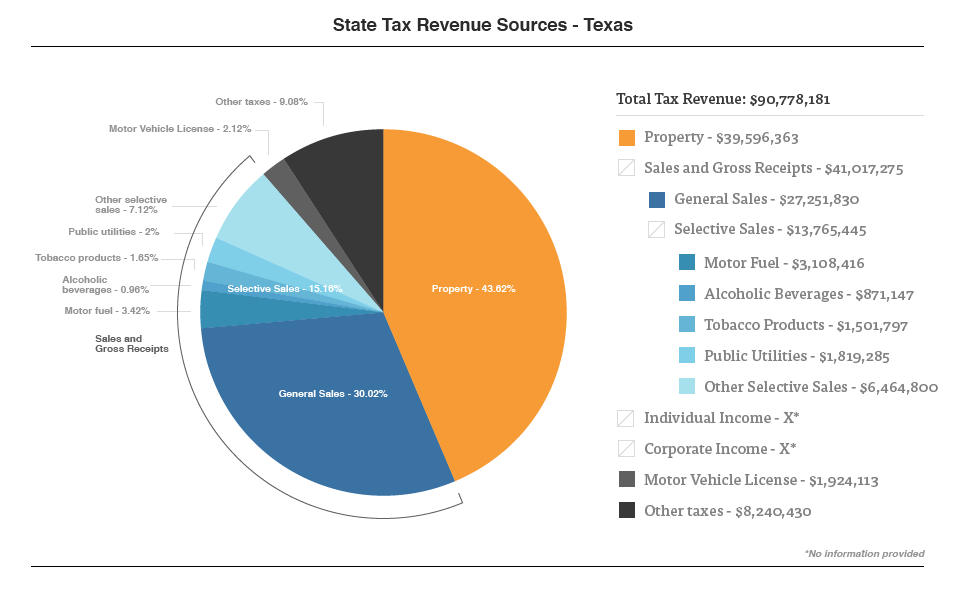
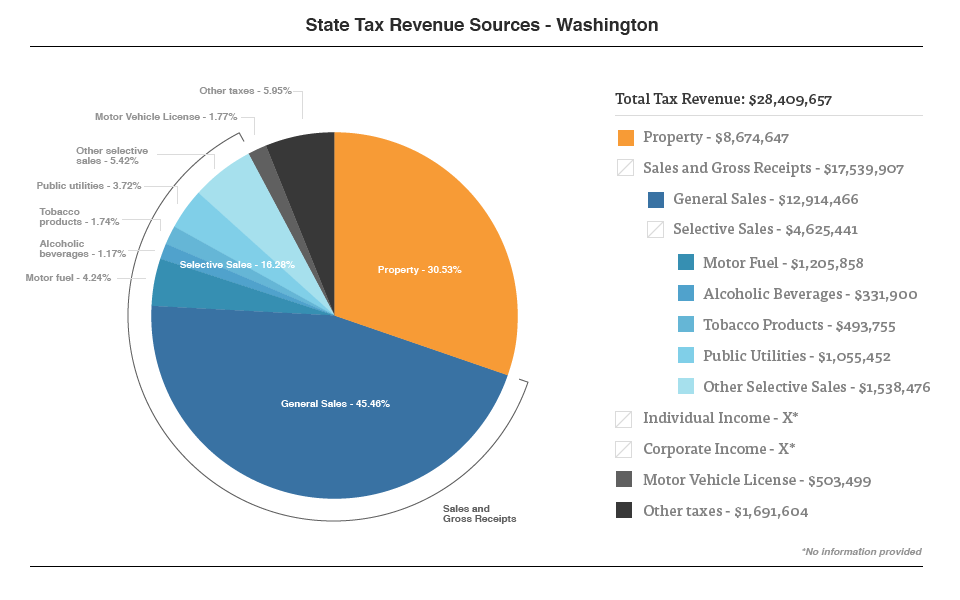
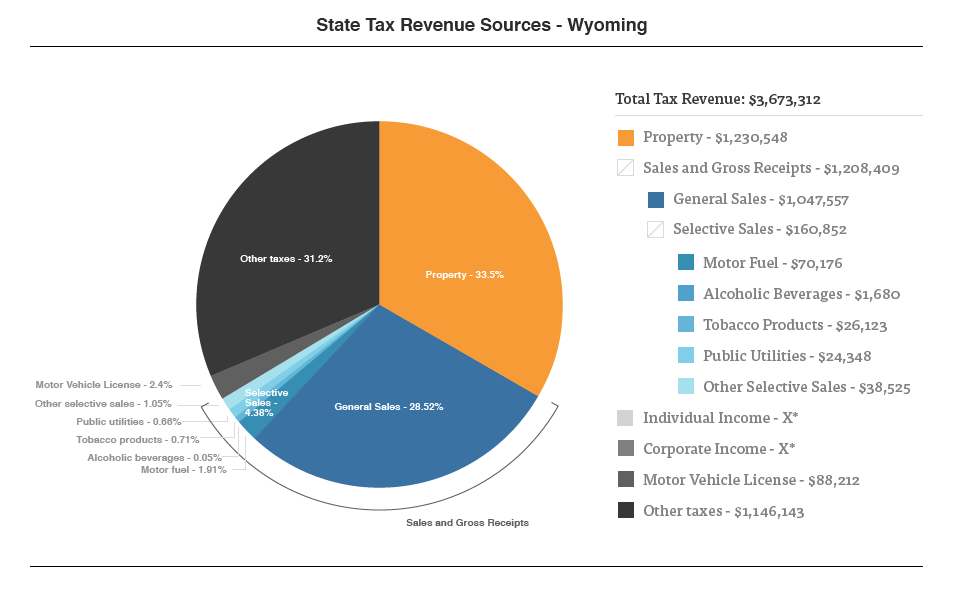
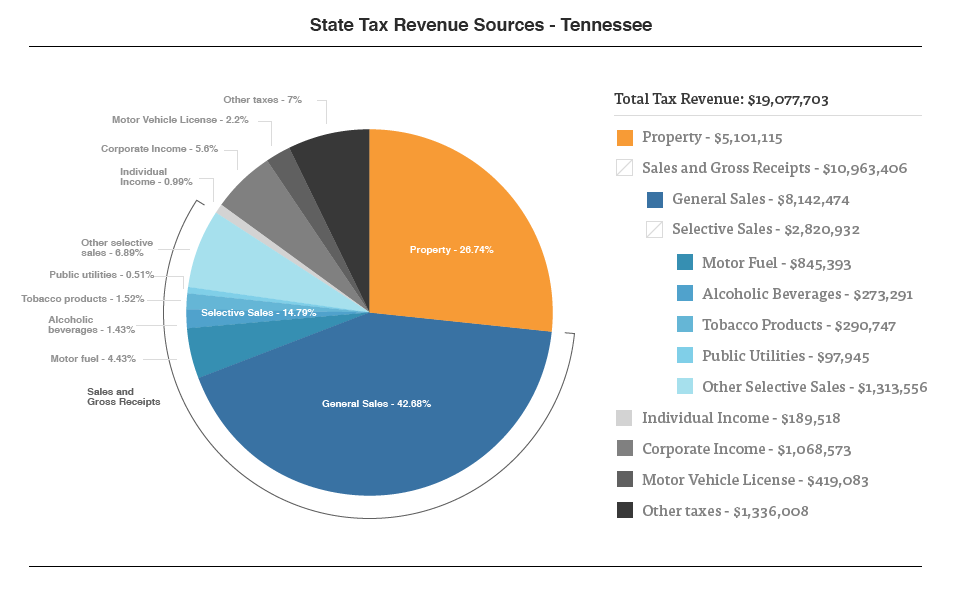
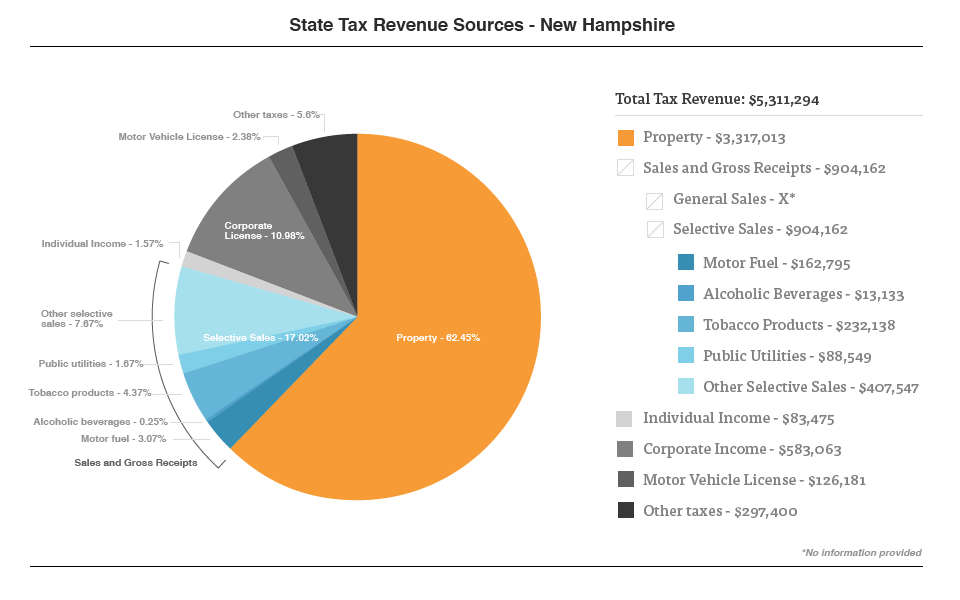
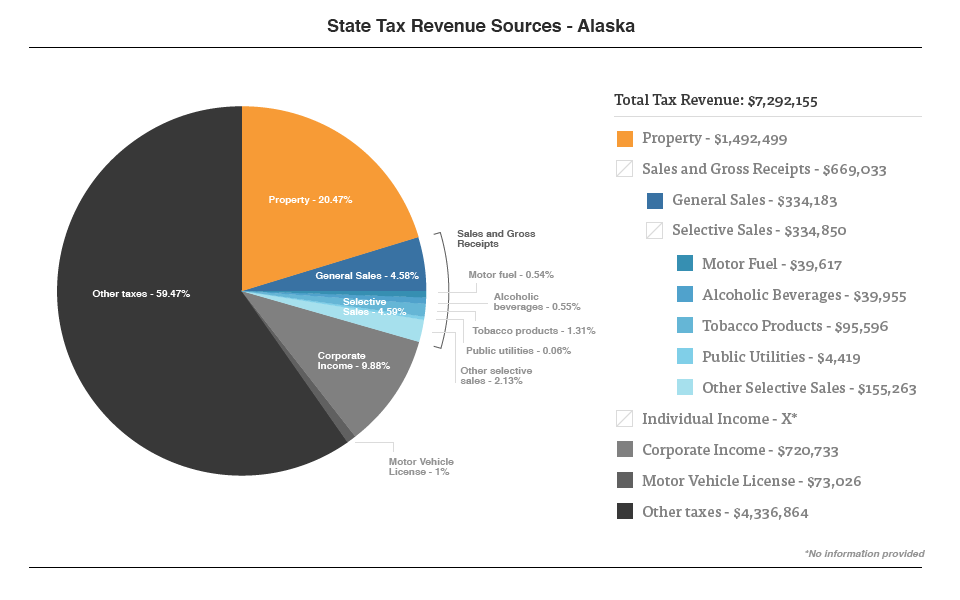
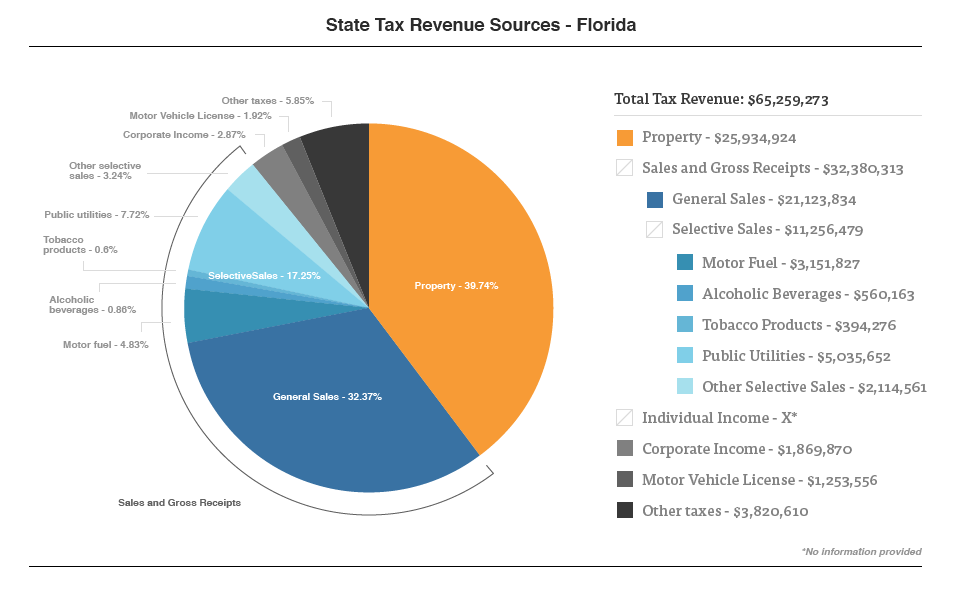
Living in one of these states will certainly save you from the hassle of having to file an extra return during tax season, but it won’t necessarily save you any money. These states make up for the gap left by not collecting income taxes by charging relatively higher property, sales, and fuel taxes.  Based on 2013 data, the following graphics indicate where each of these states derived their revenue:

Alaska

Florida

Nevada

South Dakota

Texas

Washington

Wyoming

Tennessee

New Hampshire

Normally, you have to file a resident tax return in the state where you are a resident.  That state will tax you on all of the income earned, no matter what state it is from.  Thus things can get a little complicated if you live near the boarder in any of the “non-tax” states but work in one that does charge its residents an income tax.

So if you are a resident of a state without an income tax, you will still need to file a return in any other state where you earned money. Conversely, if you are a resident of a state with an income tax, but you work in one of the seven without one, you will not have to file a nonresident return there.

Remember, you can easily take care of all your state income tax returns at the same time you file your Federal return.  Have unfiled state returns that you need to take care of?  Feel free to give us a call or shoot us an email.

How To File Old Tax Returns

Even in the dead of winter, we'll file your old taxes!

Even in the dead of winter, we’ll file your old taxes!

If you’ve missed the April 15th deadline but for whatever reason, you STILL need to file your tax return, you might be a little confused as to what to do.  Do you need to mail it?  Can you send it in via E-File?  Keep reading to find out your options.

Current Tax Year and Date Is BEFORE October 15th
If you missed the deadline but you are filing before October 15th, then you can still E-File your return.  The IRS shuts down the E-File system in October to get everything ready for the next filing season, so you only have until then to get your return transmitted.  Your options for doing this are to:

  1. Use IRS Free File or Fillable Forms. There are stipulations regarding these options which you can read more about here.
  2. Use Commercial Software.
  3. Find an Authorized E-File Provider. File Old Tax Returns is an authorized E-File Provider via Wilson Rogers & Company, Inc.  We can gladly help you in preparing, filing and transmitting your current year tax return.

Current OR Prior Tax Year and Date Is AFTER October 15th
Well, that means that you’ve missed the E-File window and your only option is to mail a paper copy of your return to the IRS.

The following are the steps you need to take to get your return prepared and ready for mailing:

  1. Gather your supporting documents. Look for your old tax documents, such as W-2s, 1099s, or 1098s. You will need these documents to file your return(s), as the IRS will expect you to report on your return what was reported to them via these forms.
  2. Request transcripts if necessary.  The most elusive documents for most clients are their wage and income forms.  The easiest way to obtain them is to contact your old company.  However, it’s never a sure bet that they’ll have the information on record, especially if it’s from several years ago.  Alternatively, you can always get copies directly from the IRS by requesting a “Wage and Income” transcript via the IRS Get Transcript Service.  If you can’t access the web service you can always use Form 4506-T, Request for Transcript of Tax Return
  3. Prepare your return(s). This is where the rubber meets the road.  The three steps that we outline under preparing your return before E-File shuts down apply here.  You can use the IRS fillable forms, find prior year software or hire a tax professional.  If you want to know how our process works, just download these instructions or give us a call at 844-TAXES88 (844-829-3788).
    • For filing back taxes, you should seriously consider hiring a tax professional. Since you are already late on filing, it would be in your best interest to file accurate returns the first time.  This way, you don’t have to worry about a bunch of back and forth with the IRS asking you to make corrections via dozens of letters to your house.
    • A tax professional can also help to ensure that all of the deductions and credits applicable to that year are applied to your return.  Remember, tax law changes each year and remember what was applicable in 2007 in 2015 might be a bit of a stretch.  But services such as ours always retain the applicable reference literature so that we can prepare an accurate return, not matter how many years late it is being filed.
  4. Mail In Your Return.  In this post we tell you the addresses where you can send your old tax return once you’ve finished preparing it. Note that you must send it to a different IRS Service Center depending on 1) if you are sending them money or not and 2) where you live.
  5. Address any balances owed.  This post from our sister site discusses how to deal with any outstanding balances.  Our basic recommendation is to 1) respond to any IRS or state correspondence, 2) assess what options are available to you and 3) enter into an appropriate resolution.  Once you’ve filed the returns and addressed the balances (if any) you are ready to move forward.  Just make sure that you remember to file your returns going forward or you’ll find yourself reading this post all over again!

Tax Year 2015 IRS Calendar

Wondering when certain taxes are due?  Need to know the exact deadlines?  Take a look at this post as we outline the tax deadlines for individuals/businesses and employers.  For further details, chck out IRS Publication 509.

General Calendar For Individuals, Corporations & Partnerships

January 15, 2015     

  • 4th Quarter 2014 Estimated Tax Payment Due If you are self-employed or have other fourth-quarter income that requires you to pay quarterly estimated taxes, get them postmarked by January 15, 2015.

March 16, 2015

  • Deadline for filing a 2014 corporation or S-corporation return or extension.

April 15, 2015

  • Individual Tax Returns Due for Tax Year 2014. If you haven’t applied for an extension, e-file or postmark your individual tax returns by midnight April 15, 2015.
  • Individual Tax Return Extension Form Due for Tax Year 2014. Need more time to prepare your tax return? File your request for a tax extension by April 15 to push your deadline back to October 15, 2015.
  • 1st Quarter 2015 Estimated Tax Payment Due. If you are self-employed or have other first-quarter income that requires you to pay quarterly estimated taxes, get your Form 1040-ES postmarked by April 15, 2015.
  • Last Day to make a 2014 IRA Contribution. If you haven’t already funded your retirement account for 2014, do so by April 15, 2015. That’s the deadline for a contribution to a traditional IRA, deductible or not, and a Roth IRA. However, if you have a Keogh or SEP and you get a filing extension to October 15, 2015, you can wait until then to put 2014 money into those accounts.

 June 15, 2015   

  • Deadline for filing a 2014 personal return for U.S. citizens or residents living and working abroad, including military duty.
  • 2nd Quarter 2015 Estimated Tax Payment Due. If you are self-employed or have other second-quarter income that requires you to pay quarterly estimated taxes, make sure your payment is postmarked by June 15, 2015.

 September 15,  2015

  • Final deadline to file your 2014 corporation, S-corporation, partnership, or estates/trusts tax return if you filed an extension.
  • 3rd Quarter 2015 Estimated Tax Payment Due. If you are self-employed or have other third-quarter income that requires you to pay quarterly estimated taxes, make sure your third quarter payment is postmarked by Sept. 15, 2015.

October 15, 2015   

  • Extended Individual Tax Returns Due . If you got a filing extension on your 2014 tax return, you need to get it completed and postmarked by October 15, 2015.
  • Last Chance to Recharacterize 2014 Roth IRA Conversion. If you converted a traditional IRA to a Roth during 2014 and paid tax on the conversion with your 2014 return, October 15, 2015 is the deadline for recharacterizing (undoing) the conversion. Doing so could save you money if the IRA has lost money since the time of the original conversion.

 January 15, 2016   

  • 4th Quarter 2015 Estimated Tax Payment Due. If you are self-employed or have other fourth-quarter income that requires you to pay quarterly estimated taxes, get them postmarked by January 15, 2016.

Employer’s Tax Calendar   

January 31, 2015

February 28, 2015

March 31, 2015

By April 30, July 31, October 31, and January 31

Cities With An Income Tax

Maybe you are considering moving and want to know if your income taxes will be higher as a result.  Maybe you are a tax professional and just want to know what tax returns that new out of state client you landed needs to file.  Either way, knowing what cities levy an income tax is always helpful information to have.  So without further adieu, here is the summary of cities that impose some form of income tax:

Alabama: Birmingham and Mountain Brook have a 1% occupational tax on gross wages.
Colorado: Three cities impose flat taxes on compensation.  Aurora charges $2 per month on compensation over $250, Denver charges $5.75 per month on compensation over $500, and Greenwood Village charges $4 per month on compensation over $250.
District of Columbia: Washington D.C. imposes an income tax at a rate of 4% for the first $10,000 of income, 6% for $10,001 to $40,000 of income, 8.5% for $40,001 to $350,000 and and 8.95% for income over $350,001.
Delaware: Wilmington has a 1.25% tax on income.
Iowa: While not necessarily “cities” there are hundreds of school districts that impose an income tax surcharge on their residents.  These surcharges range from 1% up to close to 20% of the state income tax owed.
Indiana: Similar to above, this state’s counties tend to have an individual income tax assessment.
Kentucky: Several cities in Kentucky levy income taxes, some of the larger ones being: Bowling Green (1.85%), Covington (2.5%), Florence (2%), Lexington-Fayette (2.25%), Louisville (2.20% for residents and 1.45% for non-residents), Owensboro (1.33%), Paducah (2%), and Richmond (2%).
Michigan: Several cities in Michigan impose income taxes with rates ranging from 0.50% to 2.50%.  Detroit’s income tax rate is 2.50% for residents and 1.25% for non-residents.
Missouri:  Both Kansas City and St. Louis have a 1% income tax.
New York: New York City and Yonkers both have individual income taxes.  NYC rates range from 2.907% to 3.876%.  Effective with tax year 2014, the rate is 16.75% of the net New York State tax (i.e., the sum of all state taxes imposed for a tax year, less any credits).
Ohio: Hundreds of cities in Ohio have an income tax, including Columbus, Toledo, Cincinnati, and Cleveland.
Oregon: The Lane County Mass Transit District (Eugene, Springfield, and surrounding communities) assesses an income tax of 0.67% and Tri-Met Transportation District (Portland) imposes a 0.6918% income tax.  However, these taxes are charged to the employers.
Pennsylvania: 2,400+ municipalities and 400+ school districts within Pennsylvania impose a local income tax or local services tax.  Take a look at the Earned Income Tax page to learn more regarding the cities.

Understanding Estimated Taxes

When you work for yourself you generally have your employer withhold federal and state (if applicable) income taxes from your wages.  Then at the end of the year it becomes a calculation of if you had enough withheld (i.e. you get a refund) or have to make a balance due payment.

But what if you work for yourself (i.e. self employed) and no one is “withholding” anything from your check?  Then this post will clue you in on how you make your payments and keep Uncle Sam happy.

What is estimated tax?
Estimated tax is how you pay your taxes when you have income that isn’t subject to withholding.  Just think of it as what your employer does for you when you don’t have an employer ( so to speak).

Who has to pay it?
If you are filing as a sole proprietor (Schedule C), or receive income as a partner, S corporation shareholder, and/or a self-employed individual, you generally have to make estimated tax payments.  Fortunately, you only have to make payments if you expect to owe tax of $1,000 or more when you file your return.

If you own a  corporation, be advised that  you generally have to make estimated tax payments if you expect it to owe tax of $500 or more when you file its return.

When are payments due?
For estimated tax purposes, the year is divided into four payment periods. Each period has a specific payment due date. If you do not pay enough tax by the due date of each of the payment periods, you may be charged a penalty even if you are due a refund when you file your income tax return.

For the period:              Due date:

Jan. 11 – March 31           April 15
April 1 – May 31                June 15
June 1 – August 31          September 15
Sept. 1 – Dec. 31               January 15  of the following year

How do you pay it?
To figure your estimated tax, you must figure your expected adjusted gross income, taxable income, taxes, deductions, and credits for the year.  The worksheet in Form 1040-ES will help you figure the amount.  You can then make your payment(s) using the voucher contained within or electronically via the EFTPS system.

Each state will have a similar form or electronic platform for you to pay the corresponding state taxes.  In our home and surrounding states you would use:

Illinois Form 1040 ES
Indiana Form ES-40
Wisconsin Form 1-ES
Missouri Form 1040ES
Iowa Form 1040ES
Kentucky Form 740ES

What happens if you don’t pay it?
If you didn’t pay enough tax throughout the year (either through withholding or estimated tax payments),  you may have to pay a penalty for underpayment of estimated tax.  You can avoid this penalty if you owe less than $1,000 in tax after subtracting withholdings and credits, or if you pay at least 90% of the tax for the current year, or 100% of the tax shown on the return for the prior year, whichever is smaller.

Need help estimating your tax liability?
Give us a call at 1-844-829-3788 or shoot us an email via the link below and we’ll be happy to assist you with your quarterly projections, filling out your forms or just coaching you through the process.

Understanding IRS Statute Of Limitations

When dealing with an old tax return, sometimes people wonder just how long the IRS has to come after them for the tax.  Sometimes people want to know how long they have to claim their refund.  Other times people want to know what happens if there was a mistake.  The short answer? It all depends.

Filed Tax Returns:

Deadline for Assessment
Generally, the statute of limitations for the IRS to assess taxes on a taxpayer expires three (3) years from the due date of the return or the date on which it was filed, whichever is later.

However, the IRS has six (6) years to assess additional taxes if:

  • You omitted income that adds up to more than 25% of the income you reported on your return OR
  • You fail to included foreign financial assets that breached the reporting thresholds

Deadline For Collections
The IRS statute of limitations period for the collection of taxes, known as the Collection Statute Expiration Date (CSED), is generally ten (10) years. Thus, once an assessment occurs, the IRS has 10 years to collect.  If they can’t collect within the time frame then the taxes simply just vanish as a result of being discharged.

Unfiled, False or Fraudulent Returns:

Deadline to Claim Your Refund
The deadline for you to claim a refund on a tax return in which one was owed to you is 3 years from its due date (including extensions).  For example, if you were due a refund on your 2011 Income Tax Return (which was due April 15th 2012), you have until April 15th 2015 to claim it.  If you don’t file a claim for a refund within three years, the money becomes property of the U.S. Treasury.

Note, there are no interest and penalties for failing to file a return in which a refund was owed.  However, if you have a balance due, those items can be pretty stiff as outlined in this post.

No Statute Situations
The IRS has an “unlimited” amount of time to assess taxes against a taxpayer if they can establish that they:

  1. Simply failed to file a return;
  2. Filed a false or fraudulent return; or
  3. Willfully attempted to evade tax
Go to Top